Mortgage Closing Costs Explained: What Homebuyers Should Know
What mortgage closing costs typically include — origination charges, appraisal and title fees, prepaids, points, and lender credits — and why estimates can change.
- Closing costs are the fees and prepaid expenses due when you finalize a mortgage — separate from your down payment, though both are typically due at closing.
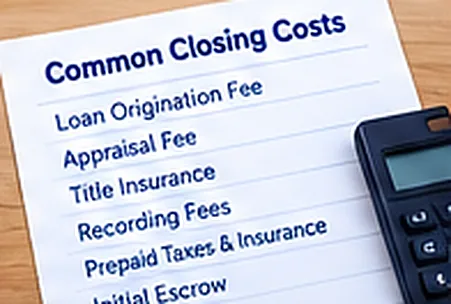
- Common categories include lender origination charges, appraisal and title fees, government recording fees, and prepaid items like homeowners insurance and property taxes.
- Some closing costs are shoppable (you can choose the provider); others are set by the lender or third parties you can't select yourself.
- Your estimated closing costs can change between your initial Loan Estimate and final Closing Disclosure — understanding why helps you spot unexpected changes.
This article is for general informational purposes and does not constitute financial, insurance, legal, or tax advice.
Table of Contents
- What Closing Costs Actually Are
- Origination Charges
- Appraisal
- Title-Related Charges
- Government Fees
- Prepaid Expenses
- Initial Escrow Deposit
- Points, If You Choose Them
- Lender Credits: The Opposite Tradeoff
- Cash to Close vs. Closing Costs
- What’s Shoppable vs. What Isn’t
- Why Estimates Can Change
- Closing Costs Checklist
Closing costs catch a lot of first-time buyers off guard — not because the concept is complicated, but because the total is made up of many smaller charges that aren’t always explained clearly. Here’s a plain breakdown of what typically goes into mortgage closing costs, using the terminology the CFPB’s standardized disclosures use, explained in plain language.
What Closing Costs Actually Are
Closing costs are the fees and prepaid expenses you pay to finalize your mortgage loan and complete your home purchase. They’re distinct from your down payment — the down payment goes toward the home’s price itself, while closing costs cover originating the loan, verifying the property, prepaying certain expenses, and various government and administrative fees.
The CFPB notes plainly that homebuyers generally bear these costs, “though sellers may contribute depending on contract terms or state law” — and even when a cost appears to be covered by a credit rather than paid directly, buyers often end up paying for it indirectly, through a higher loan amount, a higher rate, or a higher purchase price.
Origination Charges
Origination charges are fees the lender charges for processing, underwriting, and preparing your loan. On a Loan Estimate, these appear as a distinct line item and generally aren’t something you can shop around for separately, since they’re set by your chosen lender.
Appraisal
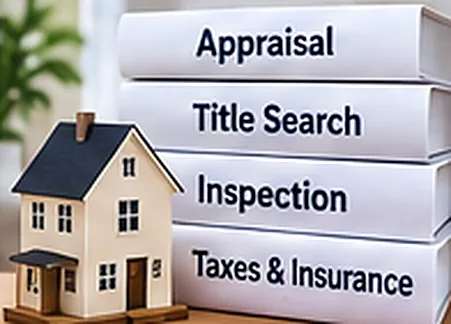
An appraisal is a professional, independent assessment of the home’s market value, generally required by the lender to confirm the property supports the loan amount. The appraisal fee covers this service.
Title-Related Charges
Title insurance and related title services protect against problems with the property’s legal ownership history — for example, undisclosed liens or ownership disputes. There’s typically a lender’s title policy (protecting the lender’s interest) and, often, an optional owner’s title policy (protecting your interest as the buyer). In many states, title insurance is one of the “shoppable” services on your Loan Estimate.
Government Fees
Government recording and transfer fees cover the cost of officially recording your new deed and mortgage with local government offices, and in some states or localities, transfer taxes tied to the sale itself. These are set by the applicable government body, not the lender, and vary significantly by location.
Prepaid Expenses
Prepaid expenses cover costs you’re paying in advance at closing, including:
- Prepaid interest — interest that accrues between your closing date and your first regular mortgage payment
- Homeowners insurance — often the first year’s premium, paid upfront
- Property taxes — a prorated amount depending on your closing date and local tax schedule
Initial Escrow Deposit
Separate from prepaid expenses (though related), the initial escrow deposit funds a cushion in your escrow account so your servicer has enough on hand to pay upcoming property tax and insurance bills on your behalf. This isn’t a fee paid to a service provider — it’s money going into an account that’s still yours, just held by the servicer for these specific purposes.
Points, If You Choose Them
If you decide to pay for discount points to lower your interest rate, that cost is added to your closing costs. This is optional — nothing requires you to buy points — and whether it makes sense depends on how long you plan to keep the loan. Our guide to mortgage points walks through that tradeoff in detail.
Lender Credits: The Opposite Tradeoff
Lender credits work in the opposite direction from points: instead of paying more upfront for a lower rate, you accept a somewhat higher rate in exchange for the lender covering some of your closing costs. This can reduce the cash you need at closing, at the cost of paying more in interest over time. Like points, whether this tradeoff makes sense depends on your own plans and finances.
Cash to Close vs. Closing Costs
These two terms are related but not identical:
- Closing costs are the total of the fees and prepaid items described above.
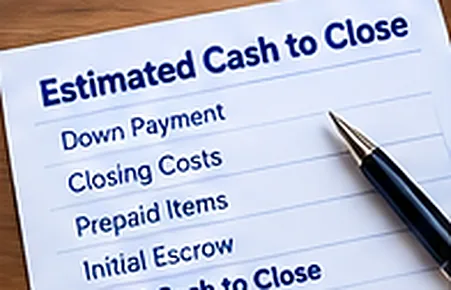
- Cash to close is the total amount of money you need to bring to closing — which includes your closing costs, plus your down payment, minus any deposits you’ve already paid (like an earnest money deposit) or seller/lender credits applied.
What’s Shoppable vs. What Isn’t
Your Loan Estimate divides services into categories:
| Category | What it means |
|---|---|
| Origination charges | Set by your chosen lender — not shoppable |
| Services you cannot shop for | The lender selects the provider (even though a third party performs the service) |
| Services you can shop for | You may choose your own provider, potentially at a different price |
| Taxes and government fees | Set by government bodies — not shoppable |
| Prepaids and initial escrow | Based on your loan and property, not a shoppable service |
For services you can’t shop for individually, the CFPB recommends comparing the overall cost across Loan Estimates from different lenders, since you can’t isolate and compare that one line item on its own.
Why Estimates Can Change
Your initial Loan Estimate is just that — an estimate. Some figures are allowed to change by the time you receive your final Closing Disclosure, for reasons including:
- You chose a different service provider than the one the lender identified for a shoppable service
- Certain costs (like prorated property taxes) weren’t final at the time of the estimate
- Your loan terms changed because of a change in your financial situation or the property itself
- More than a set number of days passed, or other circumstances specifically allowed changes under federal rules
Significant, unexplained changes to costs that are supposed to stay fixed are worth raising directly with your lender.
Closing Costs Checklist
- Review your Loan Estimate’s total closing costs, not just individual line items
- Identify which services you’re allowed to shop for separately
- Confirm your total estimated cash to close, not just your closing costs
- Ask your lender to explain any category you don’t understand
- Compare your final Closing Disclosure against your original Loan Estimate before closing day

For a full walkthrough of exactly where these figures appear on your official disclosure — and how to compare offers from multiple lenders — see our guide to reading a Loan Estimate. And if your down payment is on the smaller side, our guide to PMI explains a cost that often shows up alongside these closing figures.
Frequently Asked Questions
Are closing costs the same as my down payment?
No — they're separate, even though both are typically due around the same time. Your down payment is the portion of the home's price you pay upfront rather than financing. Closing costs are the fees and prepaid expenses associated with originating and finalizing the loan itself.
Who pays closing costs — the buyer or the seller?
Buyers generally bear most closing costs, though sellers may contribute in certain circumstances depending on the purchase contract or state practices. Even when costs appear to be covered by a credit, the CFPB notes buyers often pay for them indirectly — through a higher loan amount, a higher interest rate, or a higher home price.
Can I shop around for lower closing costs?
For some services, yes. The Loan Estimate separates costs into categories — some you can shop for among different providers (like title insurance, in many states) and some the lender selects on your behalf. Comparing the total cost across a few different Loan Estimates from different lenders is generally the most effective way to see genuine differences.
What's an initial escrow deposit, and is it a fee?
It's not a fee in the traditional sense — it's an upfront deposit into your escrow account to build a cushion for future property tax and insurance payments your servicer will make on your behalf. It's part of your closing costs total, but the money isn't going to a service provider; it's prefunding your own account.
Why did my closing costs change from my Loan Estimate to my Closing Disclosure?
Some cost categories are allowed to change under federal rules — for example, if you choose a different service provider than the lender recommended, or if certain fees are based on figures (like a prorated tax bill) that weren't final at the time of the estimate. Significant, unexplained increases in categories that are supposed to stay fixed are worth questioning directly with your lender.
Do points count as a closing cost?
Yes — if you choose to pay for discount points to lower your interest rate, that cost is included in your closing costs. It's optional, not automatic, and only applies if you decide the tradeoff makes sense for your situation. Our guide to mortgage points explains how that tradeoff works.